

If you happen to be a UK player hooked on the high-risk thrill of Big Bass Crash, peeking under the bonnet at how the game is constructed can be pretty eye-opening. There’s more to it than just clicking a button and crossing your fingers. The game runs on a sophisticated digital framework that mixes random number generation, mathematical models, and live server processing. Learning this technical side helps you see past the basic gameplay. You begin to grasp the detailed engineering that determines the crash point, processes your “cash out”, and aims to keep everything honest, transparent, and exciting. Let’s break down the main parts, from the all-important Random Number Generator to the internal chat between your device and the game server that ensures each round both a shock and seamless to play.
Server-Side Mechanics and Fixed Results
The RNG plants the seed of chance, but the game server is the boss that manages everything. Housed in a secure data centre, this server takes the RNG result and manages the entire round. It issues the signal to start, triggers the climbing multiplier, and finally declares the crash. This setup is “deterministic”. The crash point is fixed from the very beginning, but the game unveils it bit by bit to increase the tension. The server also performs all the important maths, calculating what each player could win based on their stake and when they cash out. Having one central point of control is crucial for security. It blocks any tampering from a player’s device and ensures everyone in the same round witnesses the same game flow and result. This creates a unified, trustworthy multiplayer space.
Client-Side Interface: What Players Experience and Engage With
The user interface is just the presentation layer, the polished display you see on your screen. Built with technologies like HTML5 and WebGL, this interface paints the aquatic scene, the climbing multiplier indicator, and the dynamic Big Bass avatar. It gets a live data feed from the game server and turns it into the climbing numbers and graphics you watch. Its main job is to send your actions—setting a stake, pressing cash out—back to the server for approval. It has zero say in the game’s mechanics. Consider it as a very smart display terminal. This split between show and substance means the thrilling graphics and sounds stay perfectly synced with the server’s central clock. You get a smooth, immersive experience that doesn’t sacrifice on fairness or security.
The Multiplier Graph: Mathematical Structure and Variance
That thrilling climb of the multiplier isn’t just a straight line. It adheres to a specific mathematical model. This model sets the game’s volatility, its risk profile. It controls how often and where the game might crash. A high-volatility model could lead to more frequent low multipliers, but with the chance of a rare, sky-high crash. A lower volatility model might provide more consistent, mid-range multipliers. The exact algorithm controls the curve’s shape and the odds of a crash at any moment. For UK players, the takeaway is this: the model is a fixed, audited piece of the game’s code. It establishes the built-in risk and reward, so players who think strategically can fine-tune their cash-out timing based on the game’s statistical personality over hundreds of rounds.
Server Framework: Real-Time Data and Server Communication
Instant excitement of Big Bass Crash demands a stable network to function. Low-latency connections, usually using WebSocket protocol, keep a constant two-way link open between your device and the main game server. This lets the multiplier value flow to you instantly and transmits your cash-out command immediately. Your own internet connection matters here. A poor or patchy connection can create a lag among what the server has and what you observe, which might make you miss your cash-out window. The system is built to be sturdy, but a reliable connection is your best choice. It guarantees your actions arrive at the server and get confirmed without a annoying delay, keeping the gameplay smooth.
Protection Protocols: Securing Honest Gameplay and Data Protection
Safety isn’t a secondary element; it’s woven into the game’s foundations. Beyond the RNG certification, the system’s design uses several layers of protection. All information moving from you to the server is encrypted using protocols like TLS, ensuring your private and financial information protected. The game server functions in a locked-down environment with tight access controls and intrusion detection systems. Many versions also feature a “provably fair” system. This gives players with technical knowledge the tools to check, via cryptographic seeds, that the round’s outcome was generated fairly and remained unchanged. For players in the UK, these systems show a strong dedication to security. This helps this game comply with data protection laws and the stringent safety requirements established by the UKGC.
Sound and Graphics Engine: Crafting an Immersive Experience
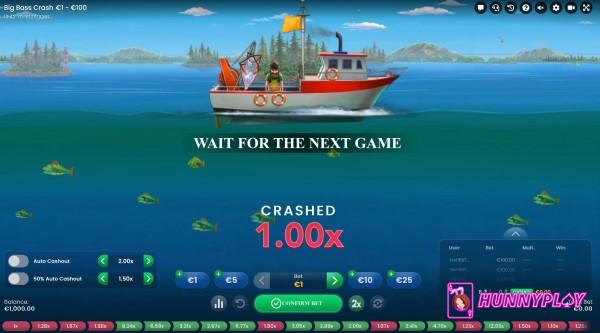
An immersive, underwater theme of Big Bass Crash originates from a specialized sound and graphics engine. This part of the machine interacts with the game server to set off particular visuals and sounds at the perfect moment—the water bubbles, the intense music as the line climbs, the splash and snap of the crash. These audio and visual files are stored and sent efficiently to prevent long loading screens without sacrificing quality. The engine’s job is to craft a sensory experience that heightens the anticipation. For you, this layer is what converts a maths-based betting game into a proper spectacle. The architecture guarantees this feeling is the identical whether you’re on a phone, a tablet, or a desktop computer.
Backend Systems: User Accounts, Wallet, and Transaction Handling
Behind the glitzy game screen, a separate backend system manages everything that isn’t pure gameplay. It manages player account details, stores encrypted wallet balances, and handles your deposits and withdrawals. When you submit a bet, this system promptly earmarks those funds from your wallet. If you cash out successfully, it computes your winnings and adds them to your balance, all while maintaining a precise record of every transaction. This system links up with different payment gateways to enable popular UK options like debit cards and e-wallets. Its trustworthiness and accuracy are absolutely critical. It handles sensitive money operations and guarantees your balance is always correct, establishing the trustworthy financial backbone of your entire experience.
Mobile vs. Desktop: Design Variations for Various Devices
The fundamental game—the logic and the RNG—remains the same one bit whether you play on a phone, a slate, or a PC. But the way it’s displayed to you adjusts. On mobile, the UI is adjusted for touch interfaces, smaller screens, and occasionally shaky network connections. The visuals might use adaptive streaming to maintain smoothness. The layout is often “responsive”, which means it rearranges the structure and button dimensions to fit your screen. Interaction with the host is also fine-tuned to be kinder on data usage and power. For British players on the go, this means you get the equally fair, server-based game, just packaged for your device. The objective is a uniform Big Bass Crash gameplay across all your gadgets, with no loss in security or equity.
The Main System: Random Number Generator (RNG) Unpacked

The Random Number Generator (RNG) is the essential centrepiece of Big Bass Crash. Consider it a certified, digital deck of cards being shuffled forever. This complex algorithm spits out results that are completely unpredictable and in no set order. It decides the exact multiplier where the game will crash each round. The moment a round starts, the RNG chooses a crash point from a huge range of possibilities and locks it in with cryptographic security. Here’s the key bit for UK players: this happens in an instant and is immutable. Nothing you do after the round begins can alter that pre-set outcome. Independent testing labs check this RNG regularly. Their audits validate its fairness and that it meets UKGC standards, so every player has the same random shot at success on every single climb.
No comment