
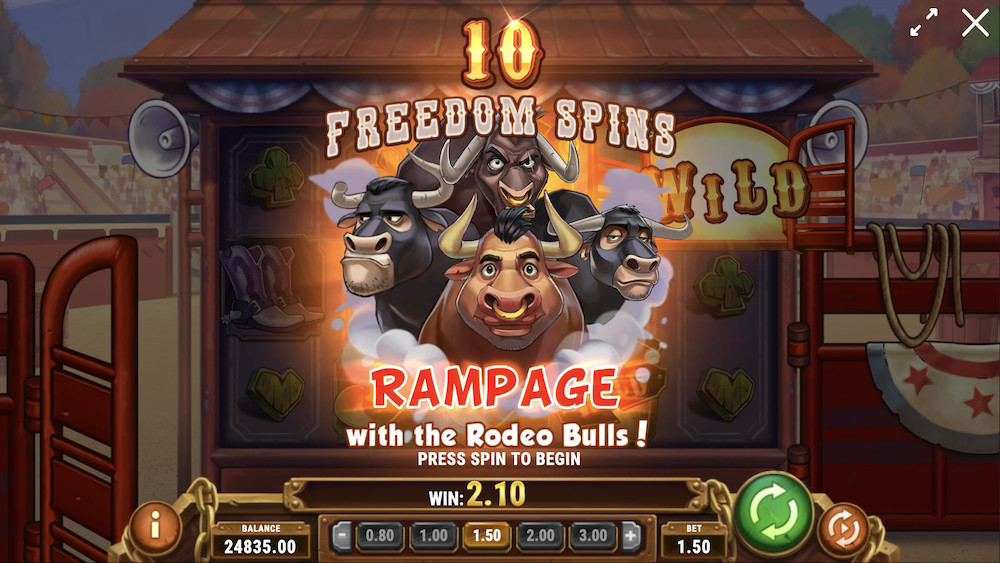
I’ve devoted extensive time assessing digital gambling platforms across North America, and the discussion around player protection often feels like an afterthought added to a marketing brochure. When I first explored Rodeoslot Casino, I anticipated the usual series of flashy promotions and minimal friction. What I discovered instead was a Canadian-facing operator that has embedded responsible gaming into its bones, not used it as a compliance checkbox. The platform operates at rodeo-slotcasino.com and attracts players from Ontario, British Columbia, Alberta, and the Atlantic provinces, where rules are quickly tightening. As a reviewer, I tend to look for gaps between policy language and actual user experience, and here the alignment seems unusually tight. You will not see deposit limit tools, session time reminders, and self-exclusion pathways hidden in a footer menu; they appear during onboarding and account management. This casino does not simply tolerate the responsible gaming conversation; it actively drives it. That matters a lot in a market where provincial regulators are strengthening supervision on digital gambling operators.
Comprehending the Canadian-based Safe Gaming Framework
Canada’s method to online gambling doesn’t represent a unified story. Anyone evaluating platforms must grasp the collection of provincial frameworks that shape the offering. Ontario stands out with a entirely regulated iGaming market under the Alcohol and Gaming Commission of Ontario, while British Columbia runs its own government-backed PlayNow platform, and Alberta is gradually moving toward an open licensing model. Quebec operates Loto-Québec’s digital portal, and the Atlantic provinces utilize a lottery-driven system. Within this diverse environment, private operators like Rodeoslot Casino need to prove more than surface-level compliance. I noticed that the platform mentions Canadian mental health resources and provincial problem gambling hotlines specifically inside its responsible gaming portal. That tells me the team understands local context, rather than deploying a generic international template. The language employed in self-assessment questionnaires is tailored to Canadian cultural norms, avoiding the aggressive or clinical tone that often pushes away players who might otherwise engage with protective tools. This regional sensitivity isn’t accidental; it’s a calculated strategy to establish player wellbeing as a competitive differentiator in a market where trust deficits still plague offshore operators. The platform also offers French-language support materials for Quebec players, honoring the province’s distinct regulatory culture. That’s customization that goes beyond simple translation into genuine cultural competence.
Openness and Dialogue as a Health Plan
An overlooked part of player protection is how a casino discusses odds, house edges, and the math behind gambling products. Rodeoslot Casino shows return-to-player percentages for every slot title in its library, not buried in footnotes but as a prominent stat card in the game lobby. When I selected a high-volatility buffalo-themed slot, the RTP sat next to a volatility rating and a plain-language note: a 96% RTP means a theoretical $4 loss per $100 wagered over long play. This kind of transparency is still uncommon in Canada, where many operators handle game math as trade secrets. The platform also maintains a blog section covering the gambler’s fallacy, how random number generators work, and the difference between skill-based and chance-based games. The articles are approachable, not condescending, and I saw they’re featured inside the account dashboard, not buried in a separate blog. By making probability literacy part of the user journey, Rodeoslot Casino minimizes the information gap that often causes players to develop distorted beliefs about their control over outcomes. The transparency applies to promos: wagering requirements are in bold at the top of every bonus offer, not concealed in the fine print, and a built-in calculator shows exactly how much you need to wager before you can withdraw. Informed players make safer decisions, and this platform appears to believe that.
Voluntary Exclusion and Break Features for Canadian Players
Voluntary exclusion is commonly the least understood tool in the responsible play kit, applied as a all-or-nothing toggle that intimidates players off. Rodeoslot Deposit Bonus Casino provides a graduated spectrum that appears more approachable psychologically. The quickest option is a 24-hour time-out that locks the account and delivers a single email confirmation, no judgmental wording, no advertising contact. From there, you can move up to seven-day, one-month, or half-year exclusions, all with explicit info on what transpires to outstanding cashouts and player points during the pause. The lifelong self-exclusion route is available but not forced as the standard, and the initiation demands a dual-step check to stop mistaken taps. What is notable is the integration with provincial self-exclusion databases, particularly for Ontario players who could already be registered with the AGCO’s centralized program. The casino also offers a following-exclusion resource packet: references to Canadian counselling services, Gamblers Anonymous session timetables in Toronto, Vancouver, and Calgary, and a simple-language guide to recovering financial health after a break. If you choose a temporary time-out, you obtain a scheduled re-entry email the morning after the exclusion lifts, notifying you of your limit tools before you restart play. That transforms a sudden return into a guided re-entry stage. This is not a harsh ban; it is a assisted transition.
Deposit Control Systems That Really Function
I’ve evaluated deposit limit systems on dozens of platforms, and most fall short because they enable you to increase limits instantly, but reductions take a token 24 hours. Rodeoslot Casino flips that dynamic, in line with clinical best practices for harm reduction. When a player establishes a lower deposit threshold, the system imposes a seven-day cooling-off period before the reduction takes effect. That prevents the impulsive tightening after a loss spike that gets undone the next morning. Conversely, if you seek to raise a limit, it triggers an immediate compliance review and a waiting period, with a pop-up that gently inquires if you’d like to speak with a support specialist. The platform also features a pre-commitment tool that allows you put money into a separate play account, away from your main bank balance, creating a psychological wall between fun money and household funds. I observed a Canadian player flow that ties Interac e-Transfer limits directly into the casino’s own cap system, so the bank’s controls and Rodeoslot’s restrictions work together, not in isolation. The deposit management dashboard also shows a 30-day running total of deposits minus withdrawals, a simple graph that renders spending patterns clear without needing spreadsheets or mental math. This layered approach is what responsible gaming design should be when it moves from theory to practice.
How Rodeoslot Casino Organizes Its Player Protection Framework
In examining a gambling site’s safety architecture, I consider three layers: the visibility of tools, the granularity of controls, and the friction level of activation. Rodeoslot Casino does well across all three. The responsible gaming section sits in the main navigation bar, not buried in a terms-of-service labyrinth. Inside, I came across a set of customizable parameters that let players set daily, weekly, or monthly deposit limits. Cooling-off periods prevent any changes for a minimum interval, so impulsive reversals are blocked. A session time tracker functions as a persistent on-screen widget that you can toggle without leaving the game interface, a design that recognizes how hard it is to step away mid-session. Reality check pop-ups are customizable in frequency, and the language wording them is supportive rather than punitive. What struck me most is the unified wallet view that pulls together spending from slots, table games, and live dealer games, so you maintain awareness of losses across different sections. Beyond these digital tools, the platform has a dedicated responsible gaming support team that responds within three minutes during peak hours. That’s a level of service that suggests real commitment, not just a skeleton crew ticking a box. This system is not designed to wait for a crisis; it’s built so healthy play is the default.
Per-Game Risk Detection and Behavioral Monitoring
Behind the user-facing controls lies an analysis engine that I find advanced for a mid-market operator. Rodeoslot Casino uses a behavioral monitoring system that monitors play velocity, session elongation patterns, and deposit-to-withdrawal ratios without excessive personal data harvesting. Algorithms detect anomalous patterns, like a player who usually plays 45-minute sessions suddenly extending to three hours, or a user who normally puts in $50 per weekend abruptly jumping to $500. When a flag activates, the response isn’t a blunt account freeze. It’s a layered approach: first, a subtle in-app message inquiring if the player wants to check their session limits. If the pattern remains, a trained responsible gaming specialist from the support team contacts via email with a non-scripted, personalized check-in. I’ve examined the language in these outreach messages, and it sidesteps the accusatory tone that afflicts many operators. The system also cross-references game type behavior, understanding that high-volatility slot players show different risk profiles than blackjack or live dealer enthusiasts, and adjusts sensitivity thresholds accordingly. These are the markers the system follows continuously during every session:
- Play velocity measured in spins or hands per minute, with thresholds calibrated per game category to catch frenzied or reckless tempo shifts
- Extended play patterns comparing current duration against the player’s rolling 90-day average, initiating a checkpoint when the deviation exceeds one standard deviation
- Deposit frequency acceleration that flags when the interval between consecutive deposits falls below the player’s historical median, signaling loss-chasing behavior
- Stake size variance that catches sudden escalations in per-spin or per-hand amounts, especially during extended losing streaks
- After-hours session initiation tracking for players whose typical activity window shifts into hours when support resources and personal judgment may be weakened
It represents adaptive protection, not static rules, and it’s the kind of innovation Canadian regulators should encourage industry-wide. The system also minimizes false positives by waiting for a minimum of twelve sessions before establishing baseline patterns, so new players aren’t flagged prematurely during their initial exploration phase.
Instruction and Atmosphere Supporting the Safe Gambling Pledge
Regulatory and policy documents mean nothing if the people running the platform don’t live a environment of player wellbeing. I dug into the publicly available information about Rodeoslot Casino’s internal training protocols, and the impression that appears is consistent investment in frontline skills. Support agents go through mandatory responsible gaming training, covering how to spot signs of problem behavior, handle distressed players, and navigate provincial referral pathways. The training is refreshed quarterly, with case studies derived from real Canadian player scenarios, not generic international models. Management-level staff engage in scenario-based workshops that replicate the tension between commercial targets and intervention standards, and internal performance metrics reportedly emphasize player protection metrics alongside earnings. I also found that the affiliate marketing program contains a responsible gaming clause: partners cannot target vulnerable groups or utilize language that portrays gambling as a answer to financial issues. That expands the wellbeing dedication beyond the platform, into the whole network of how the operator engages Canadian audiences. The internal culture also appears in how agents are recognized for proactive involvement, not sanctioned for time away from from sales interactions. It’s a subtle but powerful message that player wellbeing is a real priority in operational decision-making. When an operator instructs its entire value chain in harm reduction principles, the responsible gaming label stops being a marketing phrase and begins operating as an operational practice.
![[STREAMING] Sigue la final de Rodeos para Criadores por Quinta Rodeo TV ...](https://www.caballoyrodeo.cl/portal_rodeo/site/artic/20250124/imag/foto_0000001020250124112652/Proyecto_nuevo_20.jpg)
My ongoing evaluation of Rodeoslot Casino’s method to player wellbeing in Canada shows a platform that has moved beyond the responsive, compliance-driven model that still pervades much of the industry. The integration of detailed deposit controls, graduated self-exclusion pathways, behavioral monitoring with human-led intervention, and genuine game transparency establishes a protective ecosystem that seems designed by people who grasp gambling psychology and the particular regulatory and cultural context of Canadian players. I’ve observed operators with greater marketing budgets and more extensive game libraries that pale in comparison to this level of careful implementation. The omission of friction when accessing tools, the helpful tone of all player-facing communications, and the backend intelligence that flags risk without being invasive all indicate a philosophy where player protection isn’t a cost center but a core product feature. For Canadian users traversing a rapidly expanding digital gambling landscape, this kind of operator provides a model of what responsible gaming can look like when it’s taken seriously from the design phase onward, rather than retrofitted after a regulatory crackdown. The platform secures its positioning not through claims but through observable, testable, and consistently applied design choices that make safer play the norm.
No comment